How I Found a Reliable Earbuds Supplier in China (And What I Wish I’d Known Earlier)
After spending the better part of a decade sourcing consumer electronics out of the Pearl River Delta, I still get messages from people asking some version of the same question: How do you actually find a good earbuds supplier in China?
It’s a fair question. The market is massive, the options are overwhelming, and one wrong call can tie up six figures in inventory that won’t move. So let me share what the process actually looks like from where I’m standing — not the sanitized version you’d read in a trade magazine, but the real workflow.
The Landscape Is Bigger Than Most People Realize
When most buyers think about sourcing earbuds from China, they picture Alibaba. That’s the starting point for a lot of people, but it’s nowhere near the full picture. The real action is concentrated in Shenzhen — specifically areas like Longhua, Bao’an, and parts of Dongguan — where you’ll find hundreds of factories specializing in TWS (True Wireless Stereo) and wired audio hardware.
The challenge isn’t finding an earbuds supplier China. It’s finding the right one for your product category, volume tier, and customization needs. Those are three very different filters, and conflating them is where most sourcing mistakes start.
OEM vs. ODM: Get This Straight Before You Do Anything Else
This distinction matters more in audio hardware than almost any other category I’ve worked in.
ODM (Original Design Manufacturer) suppliers have their own existing designs — you pick a model, slap your branding on it, maybe adjust colorways or packaging, and you’re out the door. Lower MOQ, faster lead times, less risk. Great for market testing or launching a mid-tier SKU without heavy upfront investment.
OEM is the other direction: you’re bringing your own design spec, and the factory is executing it. Higher complexity, higher MOQ (typically 3,000–5,000 units minimum for anything with custom tooling), and you’ll need a much closer working relationship with the engineering team.
Most brands I know start ODM and graduate to OEM once they have sell-through data to justify the tooling cost. Don’t let anyone tell you ODM is the “cheap” option — some of the best-performing earbuds in the mid-market right now are sitting on ODM platforms with strong acoustic tuning layered on top.
What I Actually Look For When Evaluating a Supplier
Here’s my honest shortlist, built from making mistakes I’d rather not repeat:
Chipset transparency. Ask them directly which platforms they’re running. The reputable suppliers will tell you immediately — Qualcomm QCC series for premium ANC builds, BES or Airoha for mid-range TWS, JL (Jieli) for budget tiers. If they’re vague or evasive about chipset sourcing, walk away. It usually means they’re gray-market components or they don’t actually control the supply chain.
In-house acoustic tuning. This one separates the serious players from the assemblers. A factory that has its own anechoic chamber and a dedicated audio engineering team can actually iterate on your sound profile. One that doesn’t will ship you whatever the chipset reference design sounds like and call it a day.
Certification capability. For any earbuds going into the US market, you need FCC. Europe needs CE and RoHS compliance. Some markets require additional local certifications. Ask for documentation upfront, not as an afterthought two weeks before your shipment.
Firmware access. This is where things get interesting for brands that want any meaningful product differentiation. Can you co-develop firmware? Can you get access to the companion app SDK? Suppliers that treat firmware as a black box are fine for basic SKUs, but they’ll become a bottleneck the moment you want to add features like custom EQ, touch control remapping, or wear detection.
The Factory Visit Is Still Worth It
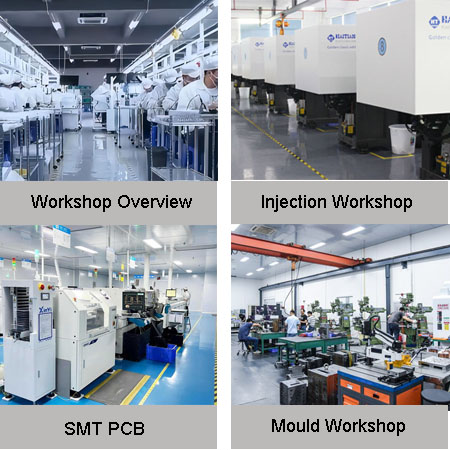
I know video calls have become the default since COVID, and they work fine for basic vetting. But if you’re planning a first substantial order — anything above $50K FOB — there’s no substitute for walking the production floor yourself.
What I’m looking for when I visit:
- How organized is the SMT line? Sloppy workstation management usually translates directly to QC inconsistency.
- Do they have dedicated QA inspection before packaging, or is it bolted on at the end?
- What’s the energy in the room? Factories where workers are engaged tend to produce more consistent output than ones where supervision is the only thing keeping the line moving.
- Can they show me recent shipment records and communicate with me about existing client SKUs without violating NDAs? A factory that volunteers appropriate references has nothing to hide.
One Supplier Worth Knowing: Tashells Audio
Over the past couple of years, I’ve had good experience working with Tashells Audio, a Shenzhen-based manufacturer that sits comfortably in the OEM/ODM middle ground that most growing brands actually need.
What stands out:
- They support both full custom OEM and ready-to-brand ODM lines, so you’re not locked into one model as your business scales.
- Their acoustic engineering team does real tuning work — not just reference design passthrough.
- FCC, CE, and RoHS documentation is handled in-house, which cuts significant time off the compliance process.
- MOQs are reasonable for a manufacturer at their quality tier — accessible enough for brands that aren’t placing container-load orders yet.
- Firmware co-development is on the table for buyers who want it, including companion app integration.
They’re not the cheapest option on the market — but in this category, the cheapest option and the right option are rarely the same thing. If you’re looking for an earbuds supplier in China that can grow with your brand rather than just fulfill a one-time order, they’re worth a conversation.
A Few Sourcing Mistakes I See Repeatedly
Chasing MOQ without checking quality tiers. Some factories will quote you 500 units to get you in the door, then quietly move you to B-grade components once you’re past the sample stage. Lock in component specs in your purchase agreement, not just price.
Ignoring lead time buffers for certification. FCC testing alone can take 4–6 weeks if there are any issues. Build that into your product calendar before you commit to retail delivery dates.
Not asking about after-sale support. Who handles warranty claims? What’s the defect replacement process? This conversation is a lot easier to have before money changes hands.
Sourcing earbuds supplier China options purely from online directories. Trade shows — Canton Fair, Global Sources Electronics — still produce better supplier relationships than any platform I’ve used online. The filtering happens in person in a way that cold Alibaba outreach simply can’t replicate.
Final Thought
Finding the right earbuds supplier in China is less about discovering a secret and more about building the right process for evaluation. The good manufacturers are out there — they’re just harder to identify through a listing page than they are through methodical vetting, factory visits, and honest conversations about what your product actually requires.
If you’re early in the process and want to compare notes, feel free to reach out. Happy to share more specific contacts or point you toward the right Canton Fair halls depending on your product tier.